


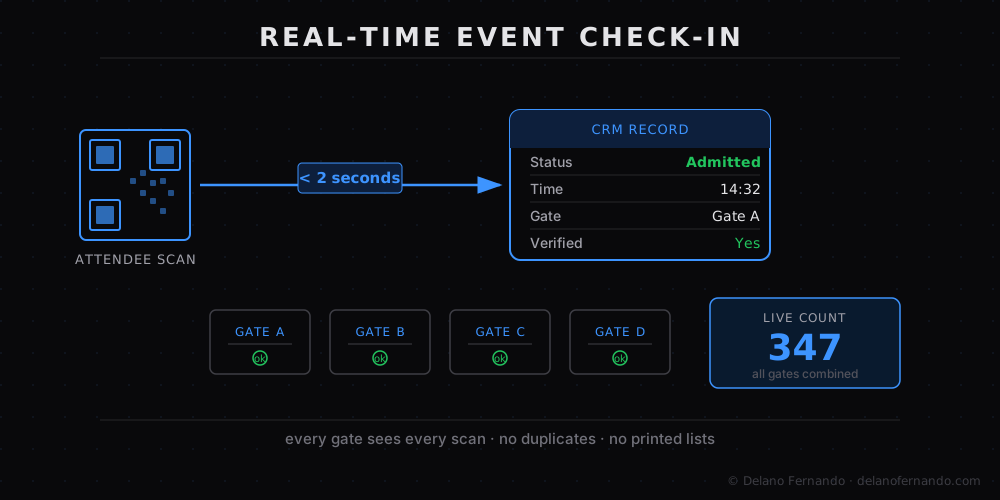
The check-in queue is not a hospitality problem. It is a data architecture problem disguised as a staffing one. Adding more staff to a broken system does not make it faster. It makes the failure more expensive.
That is worth sitting with. The queue is not caused by too few people at the gate. It is caused by information that cannot travel fast enough between gates to keep each one operating correctly.
Why event check-in software real time matters at peak arrival windows
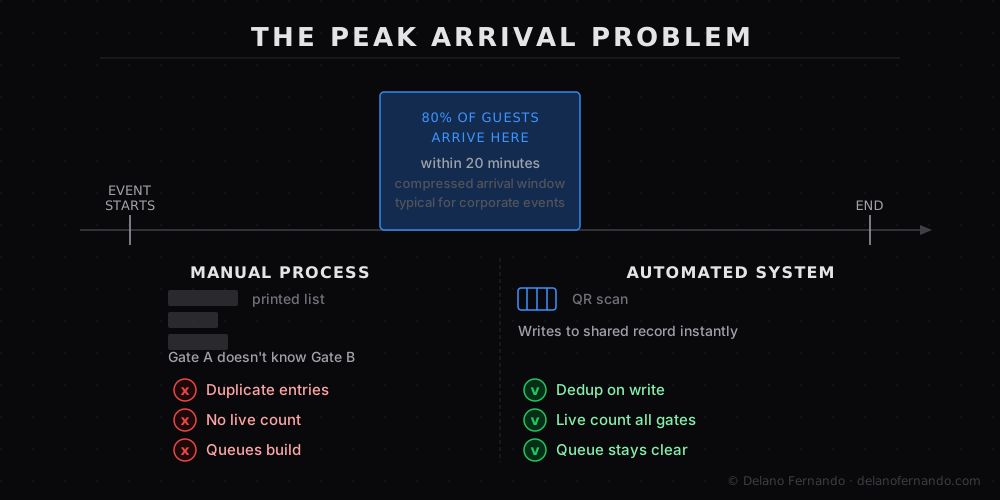
When you manage check-in with printed lists and manual tick-offs, you are not just dealing with slow processing. You are dealing with a compounding data problem.
Gate A does not know what Gate B has already done. When 80 percent of your guests arrive in the same 20-minute window, which is typical for corporate events, every gate is working from a frozen snapshot of the list. Duplicates happen: the same person is counted at two gates, or two people with similar names create confusion, and the queue behind them builds while staff resolve it manually.
By the time someone at Gate A has crossed a name off a printed sheet, that information does not exist anywhere Gate B can see it. The two lists diverge immediately and irrecoverably. This is not a discipline problem. It is a structural one.
What the system actually has to handle
The real scope of an attendee management system is wider than it first appears.
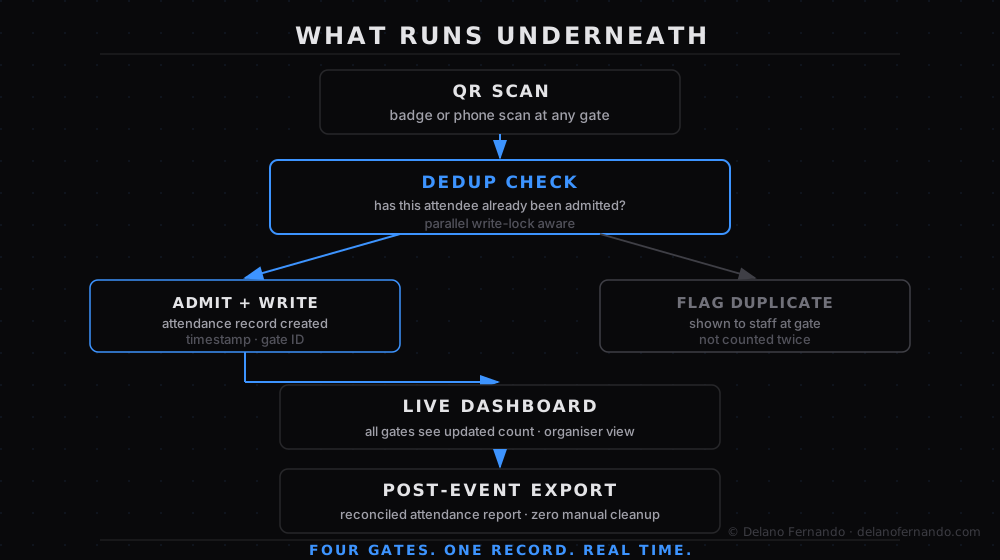
Multi-gate deduplication (ensuring the same person is not counted twice at different gates) has to happen in real time, not during post-event reconciliation. Every scan at any gate has to write to a single shared record fast enough that the next gate sees it before the same attendee walks through. That constraint alone shapes everything downstream.
Beyond deduplication, the system has to surface live attendance counts visible to all staff simultaneously, handle walk-ins who are not pre-registered, resolve ambiguous matches without stopping the queue, and produce a reconciled post-event report without any manual spreadsheet work.
A QR scan has to resolve through the system and write to a CRM (the system that holds all contact and event attendance records) in under two seconds. Slower than that and the gate operator is waiting. Event registration technology that handles this gracefully under concurrent conditions is not the same thing as a system that handles it well when guests arrive one at a time.
What runs underneath this is not trivial to replicate. Several systems have to stay in sync under write conditions that printed lists never face, and the failure modes are not always obvious until you are mid-event with a queue backing into the lobby.
What real-time event check-in looks like at steady state
When the system is working, it mostly disappears.
Gates scan. Every scan writes to a central attendance record immediately. Staff at any gate can see the live headcount at any moment. Walk-ins are added to the system on the spot, not noted on a piece of paper and entered later. Potential duplicates surface as flags rather than blockers: the gate operator sees a notification, makes a judgment call, and the queue keeps moving.
At the end of the event, the reconciliation report generates from the data that already exists in the system. There is no spreadsheet to build, no tick-marks to transcribe, no hours of post-event data entry. The attendance record is already clean because it was kept clean in real time.
That last part is worth naming explicitly. Manual systems defer the cost of data quality to after the event. An automated attendee management system pays that cost at the moment of each scan, when it is cheapest to resolve.
The lesson
The check-in queue is a data problem. Solving it is a systems design problem.
Adding staff solves the symptom for one event and leaves the cause intact for the next. Rearchitecting the data flow, so that every gate writes to a single shared record and every staff member sees the same live state, solves the cause.
The events that run smoothly are not the ones with the most people at the door. They are the ones where the information architecture is correct before the first guest arrives. The post-event side of that architecture — routing attendee data to the CRM, classifying contacts, and notifying the right reps — is covered in the event data pipeline post.
The full build is in the Real-Time Event Check-In System case study. If you are running events and check-in is a known friction point, let’s talk.