


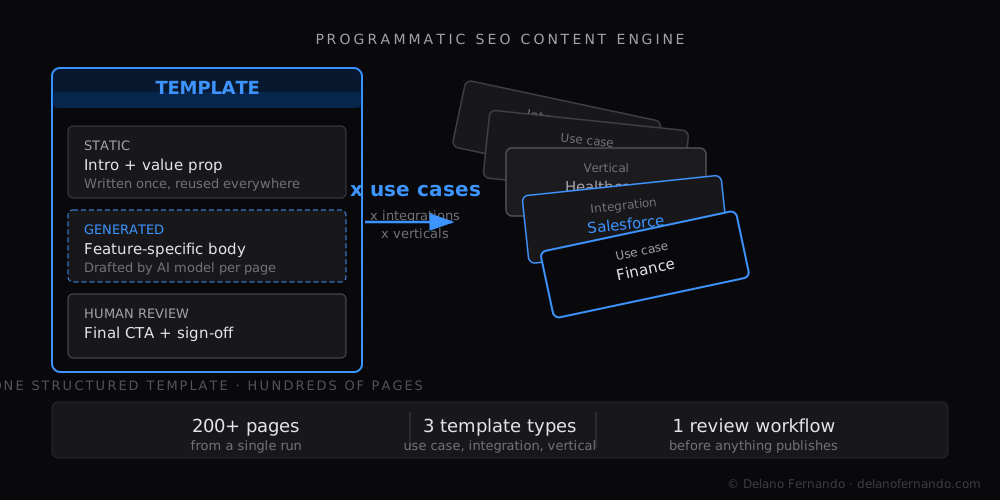
The company had the better product for hundreds of use cases. It was ranking on almost none of them. The competitors ranking above them had not built better products. They had built a content engine, and this company had not.
Programmatic SEO content AI sits at the center of every pitch about closing that gap. Most of those pitches stop before they get to the part that actually matters.
Why programmatic SEO content AI fails when it produces quantity without structure
The first generation of AI content tools made it trivially easy to produce text at scale. That ease created a predictable failure mode.
Volume without structure produces a content graph that search engines cannot navigate and readers cannot trust. A thousand pages that all say roughly the same thing about the same topic in slightly different words does not build authority. It fragments it.
Each page competes with the others for the same signals. None accumulates enough to rank on its own. The result is a large site with low topical authority: worse than a smaller, well-structured one.
The approach that works requires a structured content architecture first, then generation within that structure. Not generation first and architecture never.
The content backlog problem
When content must be written by hand, prioritisation happens by gut feel. The highest-value queries often lose to the highest-urgency requests.
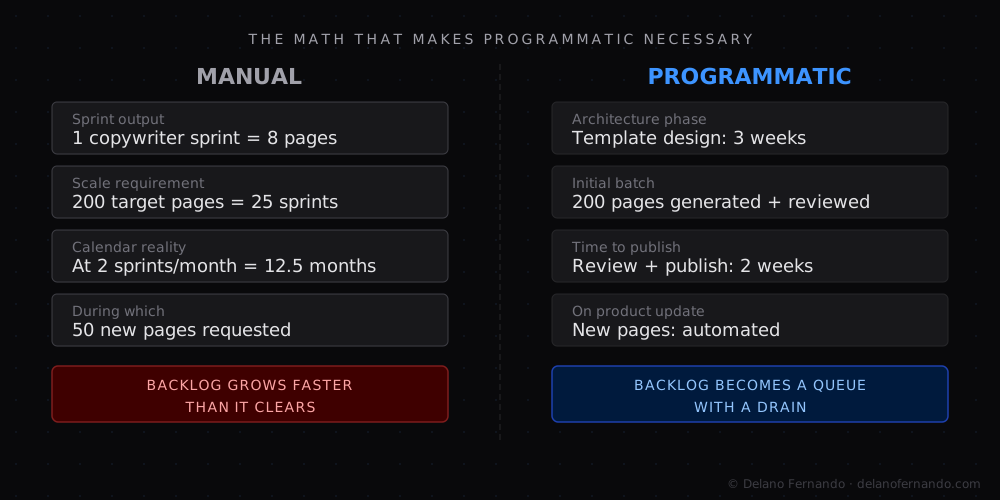
Meanwhile, 200 long-tail queries (specific, lower-volume search phrases that collectively represent substantial search demand) sit unaddressed because each individual page does not justify a copywriter’s sprint. Each query on its own looks small. Collectively, they represent more search volume than the top ten head terms on the target list.
That is where programmatic beats manual. Not because the AI content scaling produces better prose. Because it makes existence possible at all.
The team was facing 25 new page requests per month from product, sales, and demand generation combined. At the pace of hand-written production, the backlog was growing faster than it was clearing. Competitors were ranking on queries where the product clearly had the better answer, not because their content was stronger, but because their content existed. That same competitive gap — where awareness of what rivals are doing arrives too late to act on — is what automated competitor intelligence is designed to close.
What the engine actually produces
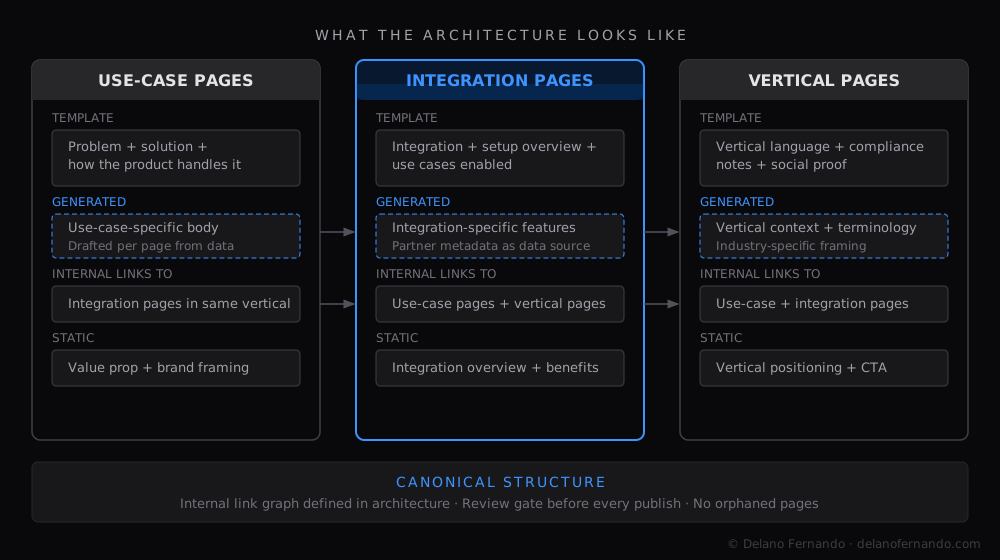
The architecture defines three content categories: use-case pages, integration pages, and vertical landing pages. Each category has its own template. Each template specifies three types of sections.
Static sections are written once by a human and reused across every page in that category. The value proposition, the brand framing, the core explanation of how the product works. This content is authoritative because a human wrote it, and it stays consistent because it does not regenerate per page.
Generated sections pull from a structured data source: product feature descriptions, integration partner metadata, vertical-specific terminology. A trained AI model drafts these sections within the template’s defined constraints. The output lands in the right structure, with the right length, without the copywriter needing to start from a blank document.
The review gate sits between generation and publication. Not every page requires the same level of review: a new integration page for a well-documented partner needs less scrutiny than a compliance-sensitive vertical page for a regulated industry. The workflow routes accordingly.
The part most people underestimate is the canonical structure (meaning Google treats it as the authoritative version, not a duplicate) and the internal linking logic. A programmatic content engine without a clear internal link architecture produces pages that rank individually for almost nothing, because they dilute each other’s authority rather than reinforcing it.
Use-case pages link to integration pages within the same vertical. Integration pages link up to vertical pages and across to related use cases. Vertical pages aggregate both. The link graph is defined in the architecture, not assembled manually page by page.
Automated content generation SEO works when the graph is coherent. It fails when it is not, regardless of how many pages get produced.
The lesson
Programmatic SEO content is a systems problem, not a writing problem.
The AI handles the generation. The work is in the architecture: which content types to build, which sections to templatise, how the pages link together, and what the human review gate looks like before anything publishes.
Get the architecture wrong and you have faster production of the wrong thing. You accumulate pages that compete with each other, dilute topical authority, and rank on nothing. The backlog clears on paper and the search graph gets worse.
The company that ranks is the one with the better structure, not necessarily the better prose. Ensuring those pages convert the right visitors once they arrive is a separate systems problem, covered in the behaviour-driven personalisation post.
The full technical detail is in the Programmatic Content Engine case study. If your content backlog is growing faster than your team can clear it, let’s talk.