


A/B testing assumes the problem is which version of a page converts better. The actual problem is often that neither version speaks to the person reading it. Testing one generic page against another generic page optimises the wrong thing.
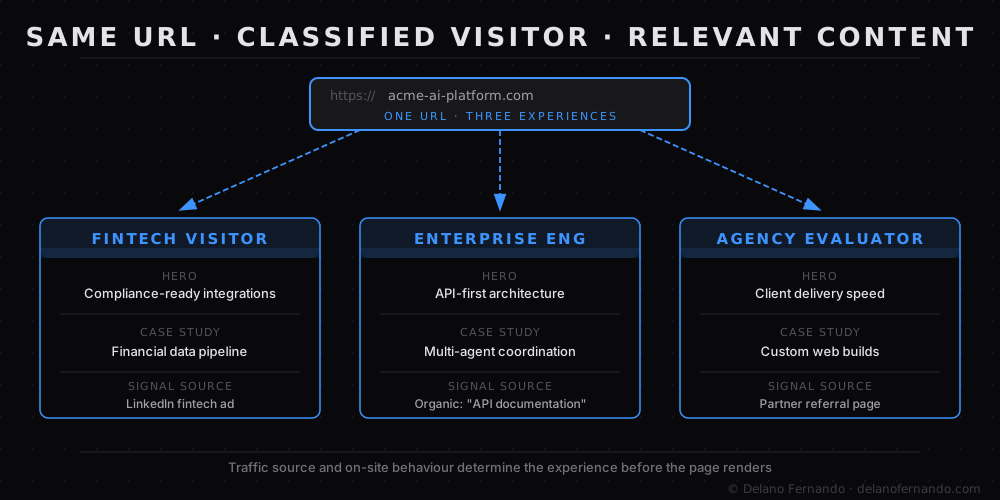
Most B2B sites have this problem. Not because the writing is bad, but because the same homepage is trying to speak to a fintech buyer, a series-B head of engineering, and an agency evaluating tools for a client. That is not one audience. It is three, each with a different question they need answered before they will do anything.
Why B2B website personalisation fails when it starts with A/B tests
The promise of A/B testing is clean: run two versions, measure which converts better, ship the winner. The problem is the question it answers. A/B tests answer “which variation converts better across all visitors?” When your visitors are genuinely different from each other, that question does not have a useful answer.
A fintech buyer wants to know about compliance controls and audit trails. An enterprise engineering lead wants to understand the API surface and what the deployment model looks like. An agency evaluator wants to know how fast they can get a client live. The same hero copy cannot address all three. The best it can do is be inoffensive to everyone, which is another way of saying it compels nobody.
Running A/B tests in this environment takes months to reach statistical significance. And after all that, the winner is still a generic page. Just a slightly less generic one.
The test is not the problem. The assumption underneath the test is: that there is a single best version of the page for everyone landing on it. That assumption fails the moment your audience is segmented by different jobs, different buying stages, and different questions they need answered.
The signal collection problem
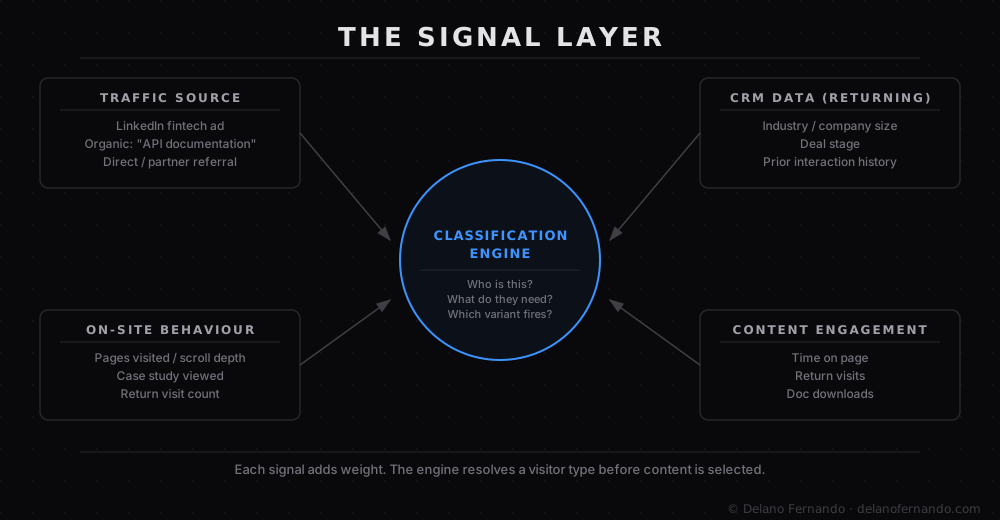
Before you can personalise content, you need to know something about the visitor. Most sites are passively collecting the raw material for this but never wiring it into anything.
Traffic source is the first signal. A visitor arriving from a LinkedIn ad targeted at fintech decision-makers is a different visitor than someone who found you through an organic search for API documentation. The campaign, the search query, the referrer: all of this is available before the page renders. Most sites log it and do nothing with it.
On-site behaviour is the second signal. Which pages did the visitor go to after the homepage? Did they click through to a case study involving financial services? Did they spend time on the technical documentation? Behaviour builds a picture of intent even when you do not know who the person is.
Firmographic data, meaning company-level attributes like industry, size, and funding stage, is the third signal. For returning visitors where a CRM match exists, this is available immediately. For cold visitors, it can sometimes be inferred from reverse IP lookup or from form fills earlier in the session.
The problem is not that these signals do not exist. It is that they sit in separate places: the ad platform, the analytics layer, the CRM. Nothing joins them in real time and acts on them.
What a behaviour-driven personalisation engine actually does
At steady state, the engine classifies incoming traffic by a combination of source signal, on-site behaviour, and where available, firmographic data. That classification drives content selection at the component level, not the page level.
A visitor identified as likely fintech sees the fintech-specific hero copy and the case study that maps to financial data infrastructure. A visitor arriving from an organic engineering search sees the technical architecture section and the link to security documentation. An agency evaluator who clicked through from a partner page sees the delivery speed narrative and the quick-start resource.
The page URL does not change. The content inside it does.
What determines which content variant fires involves a classification layer that has to handle three meaningfully different cases: cold visitors with no signal at all, warm visitors with partial behavioural signal, and known CRM contacts with full context. All three paths have to resolve in under 100 milliseconds, or you have traded a conversion problem for a performance problem.
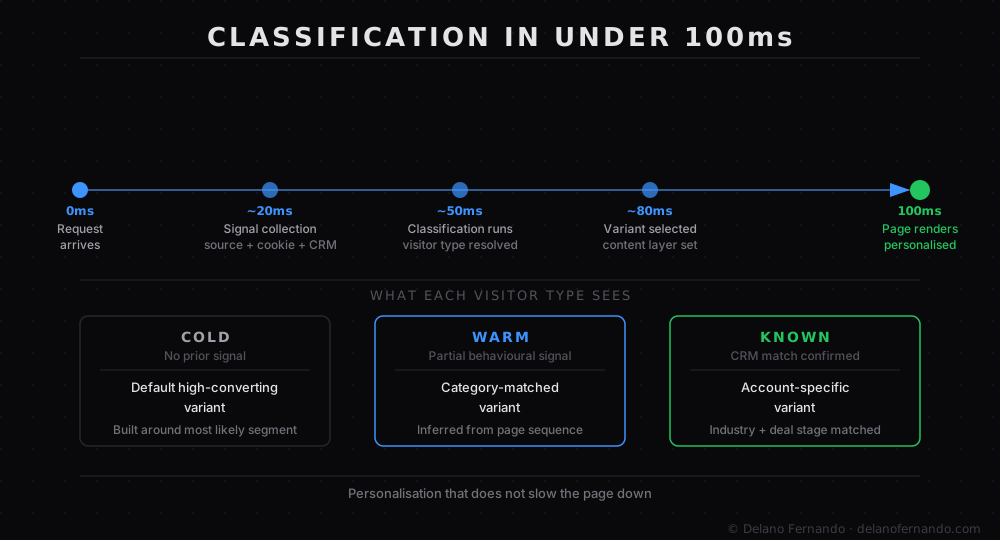
The cold visitor path is the hardest one. There is no source signal, no prior behaviour, no CRM match. The fallback has to be the highest-converting default, not a blank state. Getting that default right requires understanding which segment of your audience is most likely to convert from a generic starting point, and building the default variant around that segment rather than trying to average across all of them.
The warm visitor path uses behavioural signal to infer intent without a confirmed identity. Page sequence, scroll depth, and content engagement each contribute to a probability score across your defined visitor segments. The classification does not need to be certain. It needs to be right often enough that the personalised variant outperforms the default across the segment.
The known CRM contact path is the most direct. Account industry, company size, deal stage, and prior interaction history are all available. The content selection can be precise: not just the right category variant, but the specific case study most likely to resonate, the specific value proposition that maps to what that account cares about.
The lesson
Generic pages do not fail because they are poorly written. They fail because they are written for nobody in particular. The response to flat conversion is usually more content: more case studies, more testimonials, more feature detail. All of that helps at the margin. None of it addresses the structural issue.
B2B website personalisation is not a content problem. It is a data and systems problem. The question is not “what should the page say?” The question is “what should this visitor see, given what we know about them?”
Once you frame it that way, the work looks different. The priority is signal collection and classification before copy optimisation. The infrastructure comes first. The content layer follows. If the content layer itself needs to scale across hundreds of pages, programmatic SEO with AI automation is the logical next step — but only after the audience signal architecture is in place.
The full technical detail is in the Behaviour-Driven Personalisation Engine case study. If your site conversion is flat despite solid traffic, let’s talk.