


Ten hours a week of competitor monitoring. The team was diligent. The output was a shared doc nobody opened. The problem was not the effort. It was what the effort produced.
A Series B SaaS company in the AI automation space came in with a familiar complaint: we know what our competitors are doing in theory, but by the time that knowledge reaches anyone who can act on it, the moment has passed. The monitoring was real. The gap was in how the output was designed.
Why automated competitor intelligence fails when the output is a report
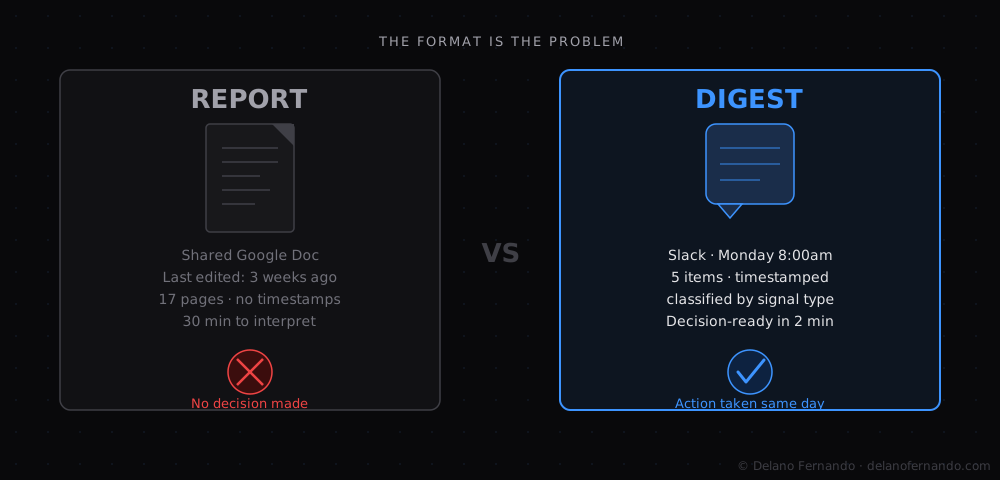
The default format for competitive monitoring is a document. Someone scans the usual sources, notes what changed, adds it to the shared doc, and sends a Slack message to let people know it was updated. The intention is good. The outcome is that nobody reads it.
The reasons are predictable. Different people check different sources on different days. Nothing is timestamped consistently. A pricing change spotted on a Thursday afternoon ends up filed in a document that was last reviewed two months ago. By the time a sales rep encounters it, the context is gone and the moment has passed.
The instinct is to fix this by monitoring more sources. That compounds the problem. More raw data in the same format produces a longer document with the same readership: zero.
Competitive monitoring automation, in the sense of simply automating the collection step, does not solve the problem. It makes the document longer.
The signal-without-context problem
A competitor lowering a price is not a signal. A competitor lowering a price while adding three enterprise sales headcount and repositioning their G2 (a software review platform used by enterprise buyers for vendor evaluation) listing from SMB to mid-market is a signal. This synthesis challenge mirrors the entity resolution problem in company scouting: isolated data points only become actionable intelligence once they are connected to the same entity and interpreted in context.
The first data point requires interpretation. The second one tells you something: they are moving upmarket, and they are willing to sacrifice margin to clear out the lower tier while they reposition. That changes how you price a competitive deal this week.
Isolated data points require synthesis before they become intelligence. Manual processes rarely have time to synthesise. They barely have time to collect. The result is a document full of raw observations with no stated interpretation, handed to people who do not have the time to supply that interpretation themselves.
This is where most competitor tracking software approaches stall. They solve the data collection problem and leave the synthesis problem entirely to the human on the receiving end.
What a useful competitor digest looks like
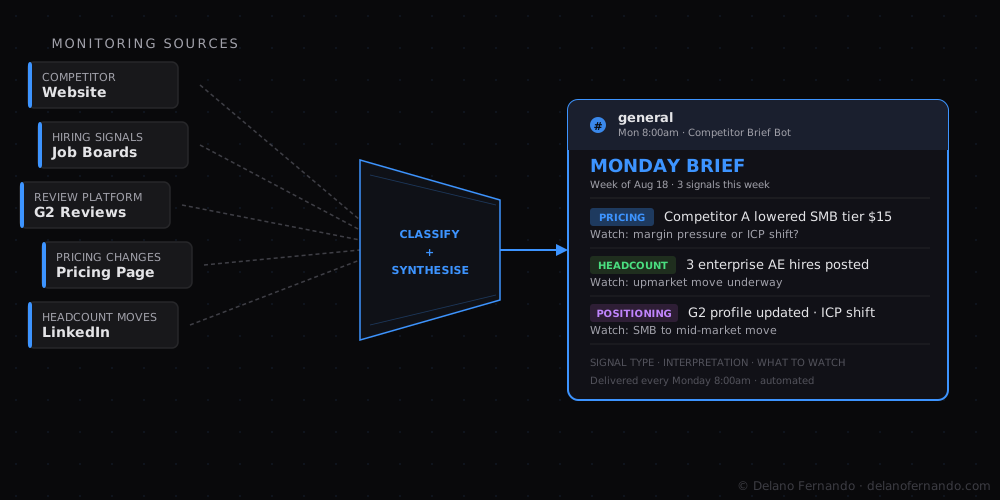
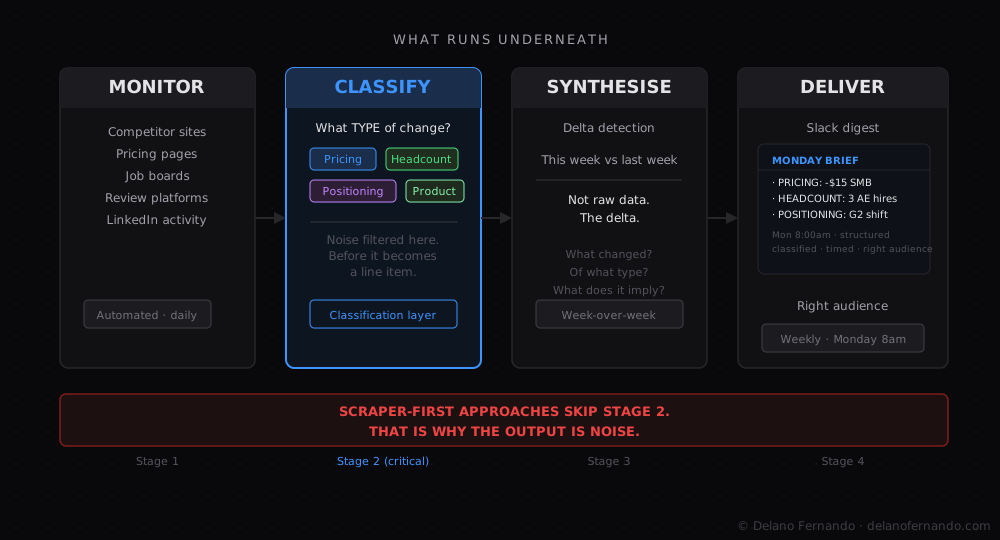
The system monitors competitor sites, job postings, review platforms, and pricing pages on a continuous basis. Each detected change is passed through a classification layer that determines what type of signal it represents: pricing, headcount, positioning, product, or noise. Noise is filtered before it becomes a line item.
Once classified, the system compares this week’s signals against the previous week. The output is not raw data. It is the delta: what changed, of what type, and what the directional implication is.
A digest lands in Slack every Monday morning, structured by signal type. Each item includes the observation, a one-sentence interpretation, and a note on what to watch next. Not a document. An input to a decision.
The underlying system has to handle source changes, formatting inconsistencies, and the difference between a site redesign and a meaningful pricing update. That distinction requires a classification layer that most scraper-first approaches skip entirely. Without it, you are back to a document full of noise, just faster.
The format matters as much as the content. Monday morning, in the channel the team already checks, structured in a way that takes two minutes to scan and act on. Timing and placement are not implementation details. They are what determines whether the output changes any decisions.
The lesson
Competitor intelligence is an output design problem. The raw information is available to everyone with a browser and a few hours. The advantage comes from delivering the right synthesis, to the right person, at the right moment in the decision cycle.
Most competitive monitoring automation projects stop after automating the collection. The collection step was never the bottleneck. The bottleneck was always the gap between observation and decision, and that gap lives entirely in how the output is formatted, classified, and delivered.
Build the classification layer first. Then the delta logic. Then the delivery format. In that order.
The full technical detail is in the Automated Competitor Intelligence Digest case study. If your competitor monitoring produces reports nobody acts on, let’s talk.