


B2B lead scoring compliance is not an add-on. It is a constraint that changes the architecture from day one.
The brief from the asset management team was straightforward: we need to score inbound leads so advisors know who to call first.
The unspoken brief, which we only fully understood two weeks in, was: and we need to be able to explain every score to compliance if they ask.
Those two requirements feel similar. They are not.
Why B2B lead scoring compliance requires a different architecture
A working score is one where, empirically, high-scoring leads convert better than low-scoring ones. That is the bar most scoring systems aim for.
A defensible score is one where you can sit in front of a compliance officer, pull up any specific lead, and walk them through exactly why that lead received the score it did. Which signals fired. What weight each signal carried. When each signal was captured.
In financial services, the second bar is not optional. It is a regulatory expectation. You are making algorithmic decisions that influence which clients get advisor attention and when. That is a consequential decision. Consequential decisions require audit trails.
Why this changed the architecture
Most scoring systems store the score. The good ones store the score plus the inputs at the time of scoring. We needed to store the score, the inputs, the weight each input carried in the final calculation, and the timestamp of each component.
That sounds like a logging problem. It is actually a schema design problem.
If you try to add detailed audit logging to a scoring system that was not designed for it, you end up with a log file full of numbers that is nearly impossible to interpret. The audit record needs to be readable by a human who did not build the system.
We designed the audit record first, then built the scoring system to produce it. Every score component is stored as: field name, raw value, normalised sub-score, weight applied, and timestamp. The composite score is derived from those components, not stored separately.
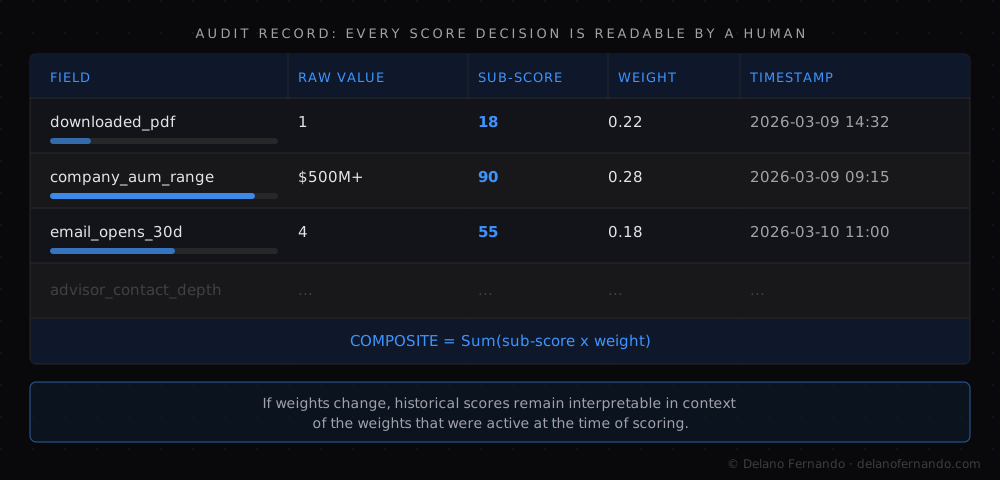
This means if the weighting model changes, historical scores remain interpretable in the context of the weights that were in effect at the time. That is not an obvious design choice. It came from the compliance requirement, not from the scoring requirement.
The four-track architecture
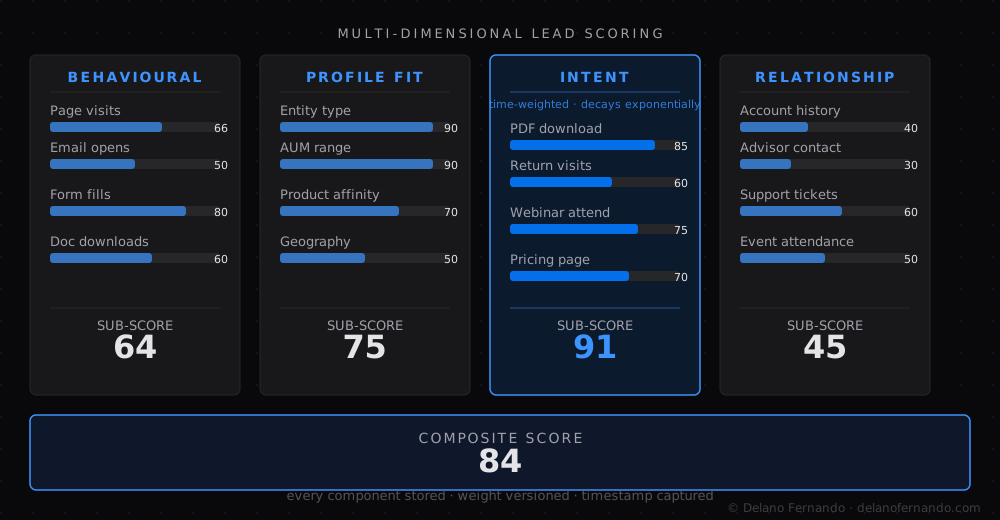
We ended up with four parallel scoring dimensions: behavioural (what the contact did on the website and in email), profile fit (entity type, estimated AUM (assets under management, the standard measure of a fund’s size) range, product affinity), intent (recency-weighted activity with exponential time decay), and relationship (existing account history, advisor contact depth).
Each dimension produces a normalised sub-score. The composite score is a weighted sum. The weights are configurable and versioned.
The time decay function on the intent track was the most contentious design decision. A contact who downloaded a product PDF three months ago and has not been back is very different from a contact who downloaded the same PDF this morning. Standard scoring systems treat these as equivalent. Ours did not.
Exponential decay is mathematically straightforward. Getting the half-life right for each signal type required calibration against historical conversion data. We got it wrong twice before we got it right.
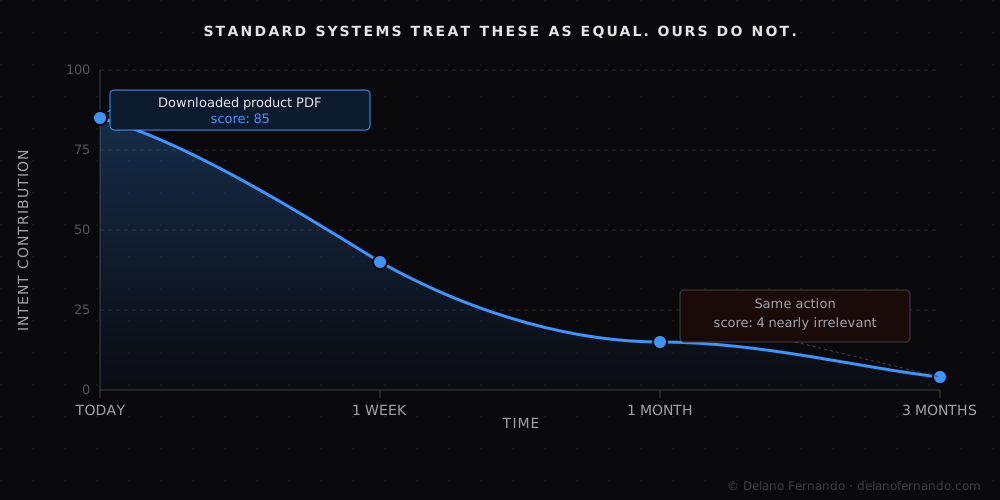
For lead scoring financial services contexts specifically, the intent track is where most systems fail compliance review: they cannot show when a signal was captured or how much it decayed before influencing a decision.
What changed for advisors
Before the system, advisors were working a flat list sorted by submission date. A correctly scored list is only useful if the routing logic underneath it is reliable — stale ownership data or misconfigured capacity checks will send even the highest-scoring leads to the wrong person. After, they had a ranked list with enough context to understand why each lead was at the top.
The score number mattered less than the signal breakdown. An advisor looking at a lead with a high intent sub-score and a low profile-fit sub-score handles that differently from a lead with balanced scores across all four dimensions. The number alone does not tell that story.
First-meeting conversion went from 18% to 41% over six months. The compliance team has not had to ask a single question about a specific lead’s score. Both of those things are true, and they are related.
The technical detail is in the Multi-Dimensional Lead Intelligence Platform case study. If you are building scoring in a regulated context, let’s talk.